

Has your vet mentioned a CT scan? What it is, and how we can help
A scan can sound daunting, so we would like to explain it plainly. This page covers what a CT scan is, when it is worth having, what the day is like for your pet at our sister practice in Lane Cove, and what happens back here with us afterwards.
Book an appointment →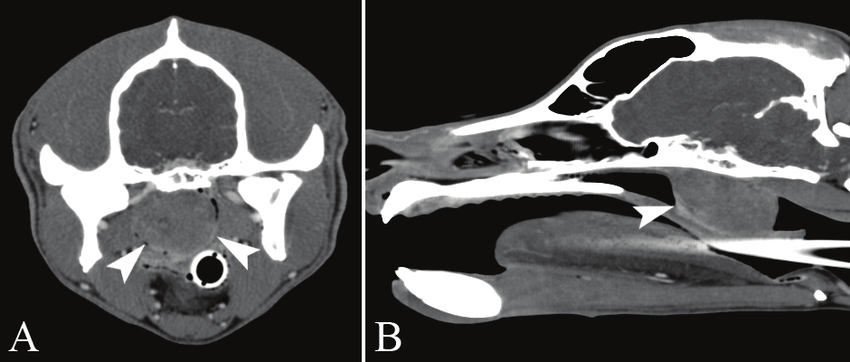
The short answer
- We will see your pet here in Eastwood first, and if a scan would help, it is done at our sister practice in Lane Cove.
- A CT scan takes X-rays from all around your pet and builds them into cross-sections, so that nothing sits hidden behind anything else.
- It earns its place where a plain X-ray runs out: the skull and nose, the chest when you need to know whether cancer has spread, the spine, and complicated fractures.
- Your pet needs to be completely still for it, so every scan is done under a general anaesthetic, never just sedation. The scan itself takes minutes.
- Every scan is reported by a specialist radiologist, usually within four hours to two business days, and faster when a case needs it.
What is a CT scan, and how is it different from an X-ray?
A CT scan (short for computed tomography) uses X-rays, but not the way a normal X-ray does. Instead of one beam producing one flat picture, the X-ray tube travels around your pet and takes readings from every angle. A computer turns those readings into a stack of thin cross-sections, or slices, through the part of the body being examined.
That is the whole difference, and it matters more than it sounds. On a normal X-ray, everything in the path of the beam lands on top of everything else, so a rib can hide a lung nodule and the layers of the skull can hide the thing you are looking for. Scanning a body area slice by slice removes that problem entirely: the whole volume is imaged with nothing sitting on top of anything else. CT also separates soft tissues far better than a plain X-ray can, so individual parts of the brain, or individual muscles, show up as distinct structures rather than one grey mass.
In plain terms: an X-ray shows you a shadow, and a CT scan shows you the shape.
When does a CT scan actually change the answer?
Not every case needs one, and most do not. A CT scan earns its place when the extra detail will change what happens next, and these are the situations where it usually does.
- The nose and the skull. This is the clearest case. The bones of the skull overlap so heavily that a plain X-ray of the nose is often close to unreadable. For nasal disease in dogs, CT is the reference standard.
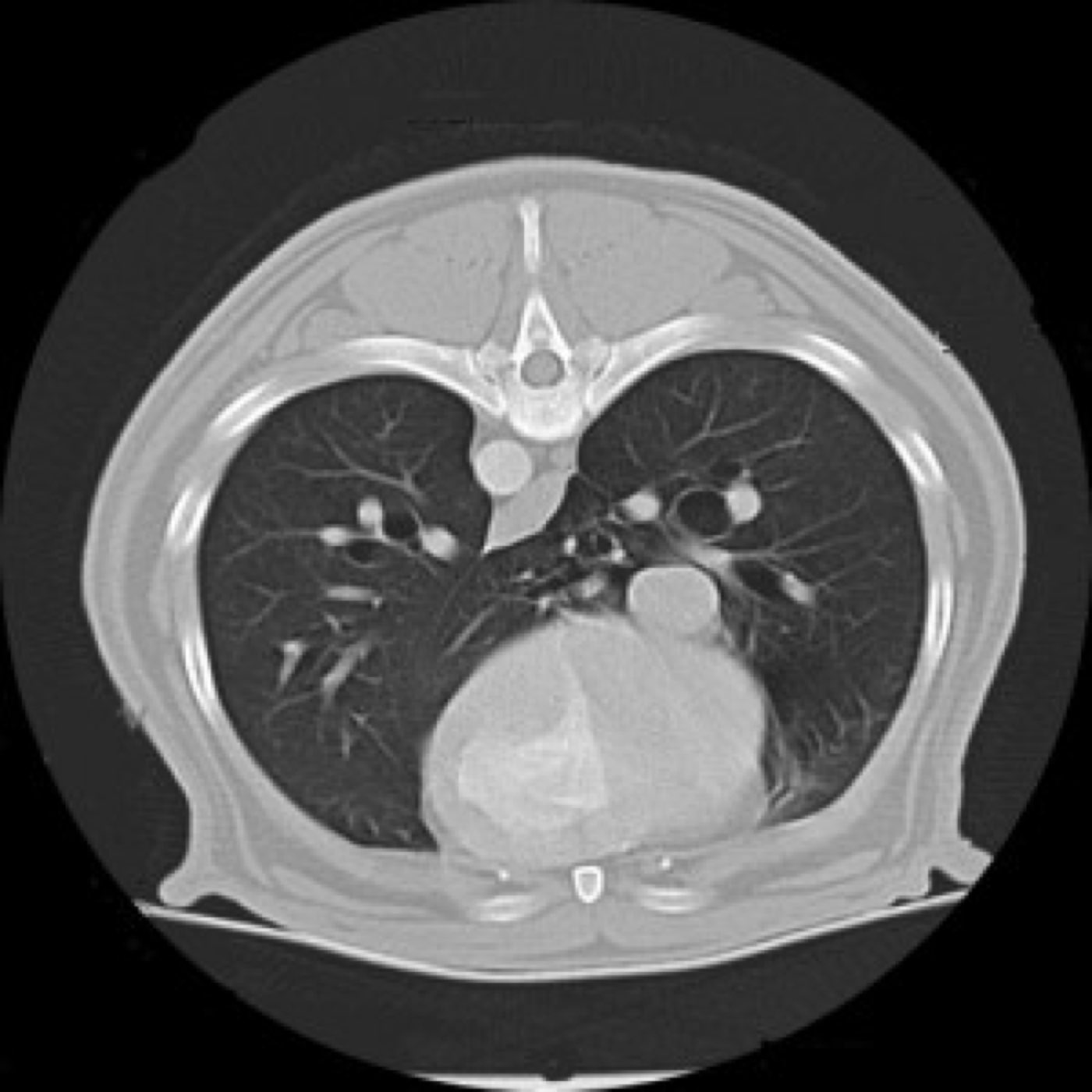
- The chest, when the question is whether cancer has spread. Small lung nodules simply do not show up on chest X-rays until they reach a certain size. In dogs with confirmed spread, fewer than one in ten of the nodules a CT picked up had been visible on the chest X-rays. The smallest nodule reliably seen on an X-ray is around 7 to 9 mm. On CT it is about 1 mm.
- The spine. CT shows the discs and the vertebrae directly. For spinal cases, contrast dye is still often injected along the spine as well, because it helps the radiologist judge how much pressure there is on the spinal cord.
- Complicated fractures and joints, where a surgeon needs the true shape of the bone before deciding how to fix it, rather than an estimate from two flat views.
- Getting a biopsy needle somewhere ultrasound cannot reach, including the lungs, the spine and the brain.
Broadly, we are looking for structural change deep inside the body: tumours, abscesses, blood vessel abnormalities, fractures that did not show up the first time, and pockets of blood.
What about X-ray and ultrasound? Are they not enough?
Very often they are, and they are the right place for us to start. X-ray and ultrasound are quick, they need no anaesthetic in most cases, and between them they answer the large majority of the questions we ask. Both are available here at Eastwood Veterinary Hospital, so the first step does not have to go anywhere else.
Where ultrasound stops is physics rather than skill. Sound will not travel through gas or bone. The beam is reflected completely where soft tissue meets gas, and absorbed where soft tissue meets bone, and both cast a shadow over everything lying behind them. That is why ultrasound is excellent for an abdomen and of very little use inside a chest full of air or a skull made of bone. Those are exactly the places CT is good at.
So the order we work in is the ordinary tests first, and a scan only when they leave a question that matters unanswered.
What happens on the day?
Where a scan is the right call, it is done at Advanced Vet Care Lane Cove, inside the same group. Here is what the day looks like there.
- The Lane Cove team admit your pet and examine them, and talk you through the plan, including exactly what the scan is trying to answer. Your pet stays with them for several hours.
- They give your pet a general anaesthetic, never just sedation. That part is not optional and it is not only about comfort, because a CT scan needs the patient completely still, and images taken on a moving animal are difficult to interpret and can leave everyone no better off than before the scan.
- They settle your pet into position on the scanner table, and the scan itself takes minutes.
- In most cases they give a contrast dye through a drip and repeat part of the scan, because contrast is what makes soft tissue and blood vessels stand out.
- Your pet wakes up in recovery with the Lane Cove team beside them.
- Every scan goes to a specialist radiologist for a report, which takes anywhere from four hours to two business days depending on how complex and how urgent the case is. You get a call as soon as it is back, and the results come to us too.
The anaesthetic is the part owners worry about most, and it is a completely fair thing to ask us about. The anaesthetic for a scan is much shorter than one for surgery, and the whole point of the exercise is to avoid the longer, more invasive alternative of finding out surgically. We are always happy to talk it through for your own animal.
What if you have already seen another vet?
Some people reading this have already had a difficult conversation somewhere else, and we know how unsettling that is. Two things are worth saying plainly.
First, we will not second-guess another vet's diagnosis without examining your animal ourselves. A scan is not a verdict on anybody's work. It is a different kind of information, and the usual reason a case reaches this point is simply that the ordinary tests have gone as far as they can.
Second, whatever you already have is worth bringing with you. Previous X-rays, ultrasound reports, blood results and clinical notes all count, and having them in front of us can mean fewer repeated tests and a faster answer.
Would you like us to take a look first?
You are welcome to bring in any X-rays or notes you already have. We will examine your pet gently, go through everything with you, and tell you honestly whether a scan would help.
Why does it matter that a scanner is in the group?
X-ray and ultrasound are on site here at Eastwood Veterinary Hospital, and they are where almost every investigation begins. CT is the one step that happens at Lane Cove.
What that changes for you in practice is that the referral is inside the group rather than outside it. Your pet's notes and X-rays go with them, and the plan comes back to the team who already know your animal.
You do not have to go outside us for this
Any of our vets can examine your pet and tell you whether a scan would actually change what happens next. Often it will not, and that is worth knowing before you pay for one. Where a scan is the right call, it is done at Advanced Vet Care Lane Cove, inside the same group.
- We can tell you whether you need it. When we do recommend a scan, it is because the answer would change what we do next for your pet.
- Your pet's history goes with them. Advanced Vet Care Lane Cove works from the same group records as we do, so nobody starts from scratch, and the results come straight back to us.
- We stay your vet. We are not handing you over. Your pet comes back to us afterwards and we manage what happens next.
- Where it happens. At Advanced Vet Care Lane Cove, in Lane Cove, part of the same group as us.
What does a CT scan cost?
At Lane Cove, scans start at $2,500 for one area, which includes the anaesthetic, and each extra area is $500, so a chest scan is $2,500 and adding the abdomen or the head brings it to $3,000. The full breakdown is on CT scan cost for dogs.
We will help you decide, without any pressure
Deciding about a scan is easier when someone has looked at your pet properly and explained the options in plain language. That is what we are here for, and whatever you decide, we will look after your pet before and after.
Book an appointment →Common questions
Is a CT scan safe for my dog or cat?
The scan uses X-rays, so there is radiation involved, and it is done under a general anaesthetic because your pet has to be completely still. Those are the two real considerations, and they are worth talking over for your individual animal, particularly if they are old or unwell. We would much rather talk you through the specifics of your own pet than offer you a blanket reassurance here.
Does my pet have to be anaesthetised for a CT scan?
Yes. A CT scan is always done under a general anaesthetic, never just sedation. Scans performed on awake or lightly sedated animals cannot be positioned properly and show movement, which makes them difficult to interpret. The scan itself takes minutes, and your pet stays in hospital for several hours on the day.
Can a CT scan check my pet's teeth?
Not as well as a dental X-ray can. This is one of the few places where the simpler test wins outright: for teeth, the detail of an intraoral dental X-ray is unrivalled, and that is what a proper dental includes. A CT scan of the skull answers different questions, such as what is happening in the nose or the jaw bone.
What is contrast, and does my pet need it?
Contrast is a dye given through a drip that makes blood vessels and soft tissues stand out on the images. Nearly all veterinary CT studies of soft tissue, such as the brain or the abdominal organs, are done with it, because without it a mass and the tissue around it can look much the same. Whether your pet needs it depends on what is being looked for.
Can I bring imaging from another vet?
Yes, and it is always welcome. X-rays, ultrasound reports, blood results and clinical notes are all useful to us, and they sometimes mean a test does not need repeating at all.
Compassionate, caring and professional Matt and the team helped our family navigate the complex and emotional issues of our dog. He asked the right questions, balancing the health and needs of our dog with quality of life. The empathy Matt shared with us comes from a place of genuine and heartfelt love for animals and their human companions.
Oscar Trimboli, Google review · 5 stars
A real review, quoted as written. Read our Google reviews →
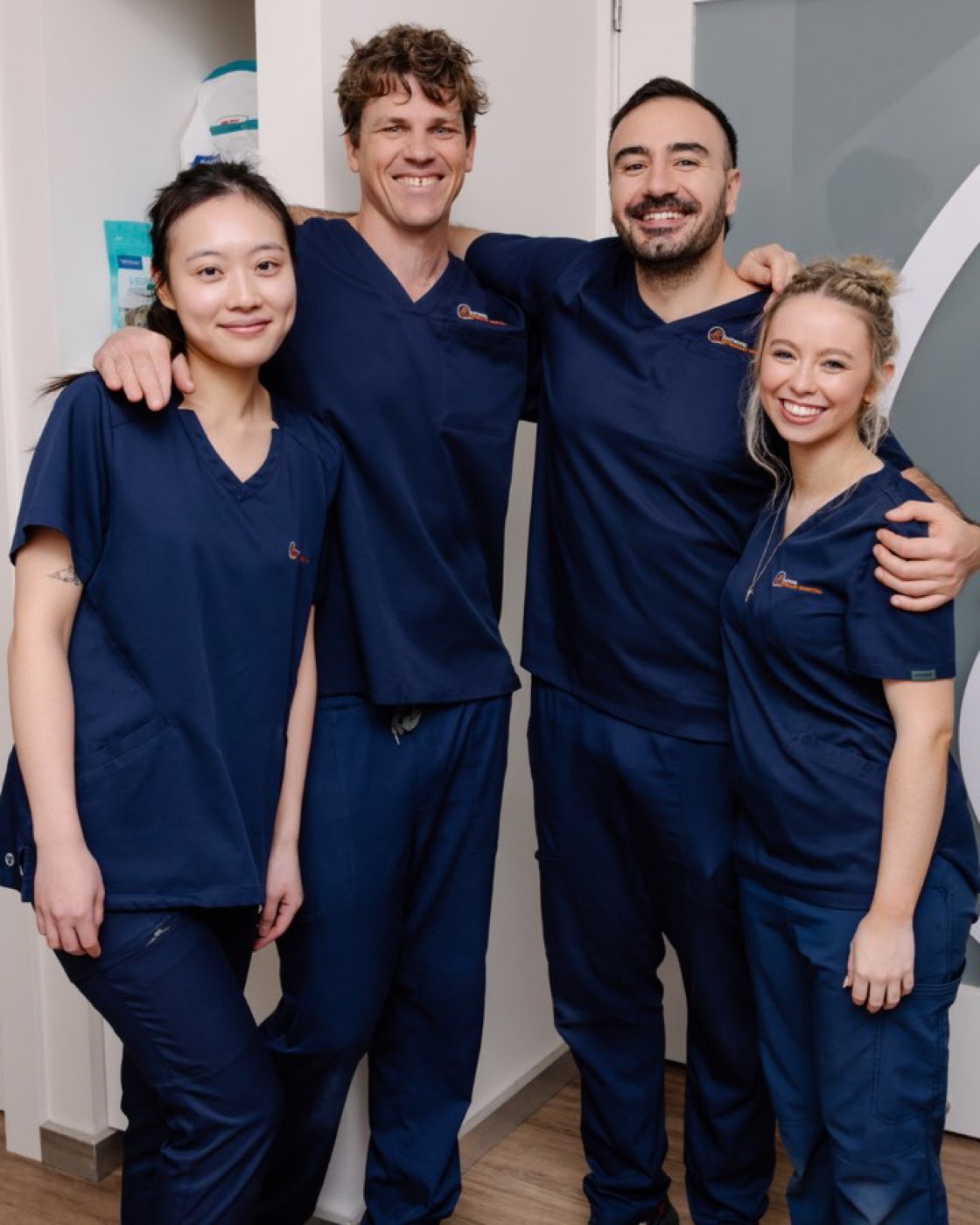
We do orthopaedic surgery here in Eastwood, and our team speaks Korean, Mandarin and Cantonese.
References
- Merck Veterinary Manual: Computed Tomography in Animals. Reviewed August 2024, updated April 2025.
- Merck Veterinary Manual: Ultrasonography in Animals. Reviewed August 2024, updated April 2025.
- Nemanic S, London CA, Wisner ER. Comparison of thoracic radiographs and single breath-hold helical CT for detection of pulmonary nodules in dogs with metastatic neoplasia. J Vet Intern Med. 2006.
- Differences in normal nasal computed tomography findings in different dog breeds. Open Vet J. 2024.
The imaging comparisons on this page are sourced above. Medically reviewed by Dr Mirko Spidalieri · updated October 2026. This guide is general information and cannot replace someone examining your individual animal.
We would love to help
You are welcome to book online, or ring us on 02 7258 9900 and the team will find a time that suits you. We can also talk things through in Korean, Mandarin or Cantonese.
Book an appointment →